The Boyz Discover Nightlife
I understood parenting.
Not particularly well at first, but there were resources. When my son was little, there were books explaining what was happening to him and, more importantly, what was about to happen to me. Somewhere along the way I acquired Parenting for Dummies, which I read with the seriousness of a man who had recently discovered that the hospital was actually going to let us take the baby home.
There were developmental stages. Milestones. Charts. You learned the rhythms, and the sudden behavioral change that made you wonder what had gone terribly wrong usually turned out to be something perfectly normal that several million children had done before yours. Eventually you even got reasonably good at it.
My son is off doing his PhD thing now, which I regard as fairly compelling evidence that we got him through childhood without doing permanent damage. I thought I had graduated.
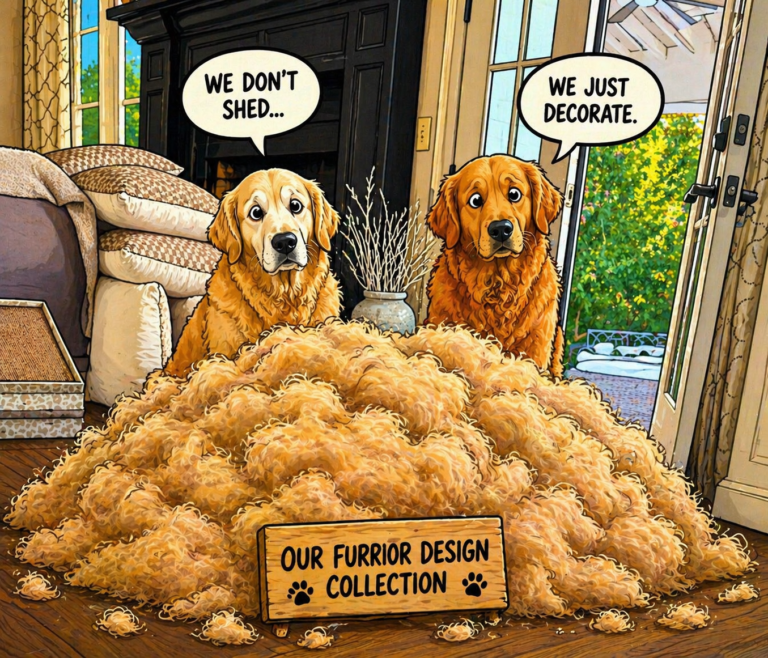
Then came Captain and Morgan. The Boyz. Two golden retrievers, roughly 85 pounds apiece, who have apparently decided that I needed another opportunity to experience parenthood. I just didn’t realize there would be developmental stages.
For most of their young lives, bedtime has been wonderfully straightforward. We go downstairs. They settle down. I settle down. The house becomes quiet.
Apparently, that was puppyhood. We have now reached eighteen months, and eighteen months, I have recently learned, is when golden retrievers discover nightlife.
It started subtly. A noise upstairs around midnight. Then footsteps, not burglar footsteps, which I would honestly find less concerning, since there are established procedures for burglars. These were Boyz footsteps, the unmistakable sound of two large animals moving through a dark house with absolutely no legitimate business to conduct.
I opened my eyes. Captain was standing beside the bed. He wasn’t frightened. He wasn’t sick. He didn’t need to go outside. He was just there, looking at me, wearing the particular expression a golden retriever can produce that somehow communicates both urgency and absolutely no useful information.
“What?”
Tail.
“What do you need?”
More tail.
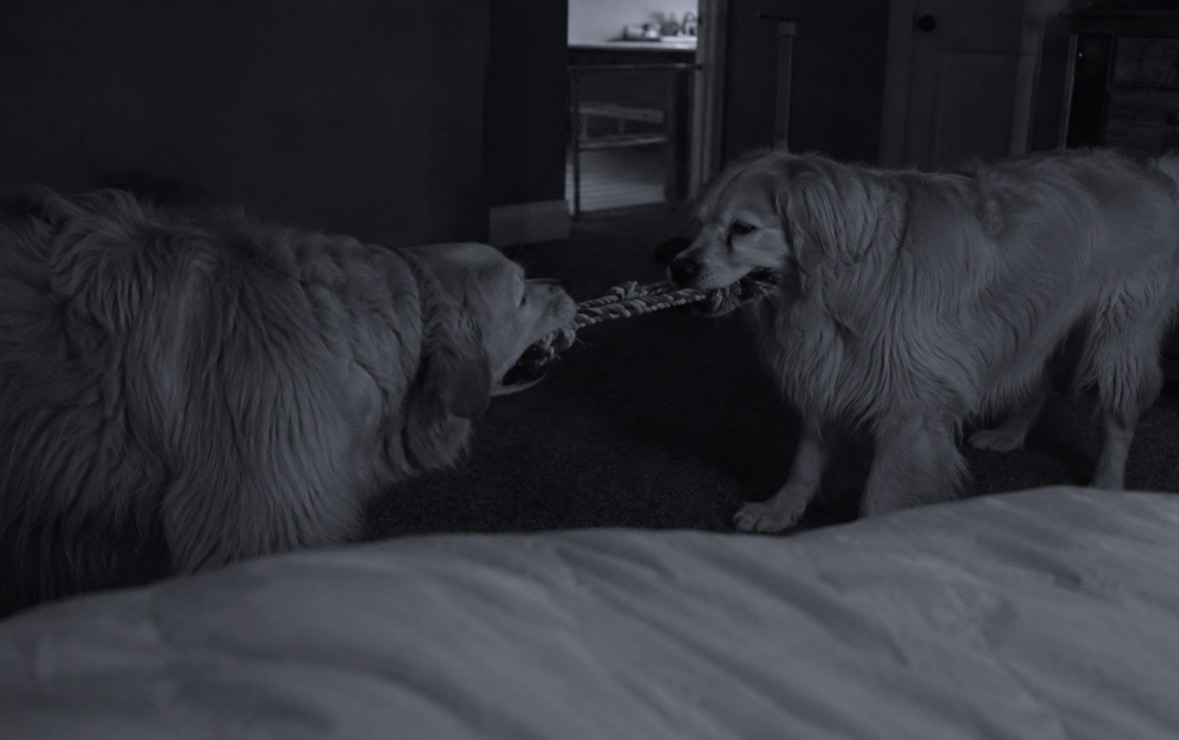
Then Morgan arrived, which changed the situation considerably, because Morgan does not generally arrive to de-escalate things. Within moments, what had begun as a quiet midnight inquiry had become an event. There was movement. There was enthusiasm. There was a rope toy.
Apparently we were open.
I tried explaining that it was midnight. This was received as information but not as an argument. Captain brought the rope closer. Morgan began bouncing. And there, standing barefoot in a dark bedroom negotiating with 170 pounds of golden retriever, I had the strange realization that I had been here before.
Not exactly here. My son never brought me a rope toy at midnight. But I remembered the feeling, the abrupt change in behavior, the suspicion that something had gone wrong, the exhausted parent wondering why yesterday’s perfectly functional routine had suddenly been rejected by a creature who had been living quite happily under the same rules for months.
With a child, I would have gone looking for the book. With the Boyz, I have Google, which is how I discovered that somewhere around eighteen months, a golden retriever enters another adolescent phase. Of course. I should have recognized it immediately. They don’t dislike the rules. They simply believe the rules deserve periodic reconsideration. Bedtime, for example, may have made sense when they were seventeen months old. But they are eighteen months old now, and perhaps the family should revisit whether midnight might be better used for tug-of-war.
Selective hearing has improved considerably. “Come” remains perfectly audible when accompanied by the crinkle of a treat bag, but apparently travels on a frequency unavailable near an open gate.
I know this stage. I’ve raised this stage. The difference is that the first time around I was younger. Much younger. Nobody tells you that one of life’s little jokes is that you can successfully raise a child, send him off into the world, watch him pursue an advanced degree, and then find yourself twenty-some years later standing in your bedroom after midnight saying, “No. We are not doing this.”
Captain stared at me. Morgan had the rope. For a moment, nobody moved.
Then Captain looked at Morgan. Morgan looked at Captain.
I recognized that look too. It was the look that says Dad has made his position clear and we should probably respect it. Or wait until he falls asleep.
I went back to bed. There was silence for perhaps thirty seconds.
Then somewhere in the darkness:
thump.
thump thump.
The rope had apparently survived negotiations.