The Winston Principle
Winston arrived in our house as a rescue, which is a word people use when they want to feel good about a transaction that is, fundamentally, adopting a stranger’s problem. He was lean then. Not starving, but aware of meals in the way that only animals who’ve had to think about meals ever are. He ate what he needed and not more, which made him, in retrospect, the most psychologically stable member of our household.
Then Dori died.
Dori was the pitbull. Sixty-two pounds of pure opinion, deployed affectionately and without apology. She and Winston had an arrangement that looked, from the outside, like mutual contempt but was actually something closer to what long marriages become: two creatures who have stopped performing for each other and can just be in the same room without explanation. She slept somewhere. He slept somewhere else. They both knew where the other one was at all times.
When she died, Winston did what grief does when you don’t have language for it. He ate.
Not frantically. Not the way Morgan eats, like he’s defusing a bomb and the only tool available is his face. Deliberately. Methodically. With the focused attention of a man who has decided that if the world is going to be unreliable, at least dinner will happen. He put on weight the way clouds gather before a storm you don’t notice until it’s already on top of you. Slowly, then suddenly.
We thought it would pass. It didn’t pass.
What passed was time. What passed was the particular quality of silence that settles into a house after an animal dies, that specific absence that has a shape and a weight of its own. Winston moved through it. He ate his way through stages of grief that no therapist had ever formally catalogued but that seemed, from a behavioral standpoint, entirely legitimate.
Then the Boyz arrived.
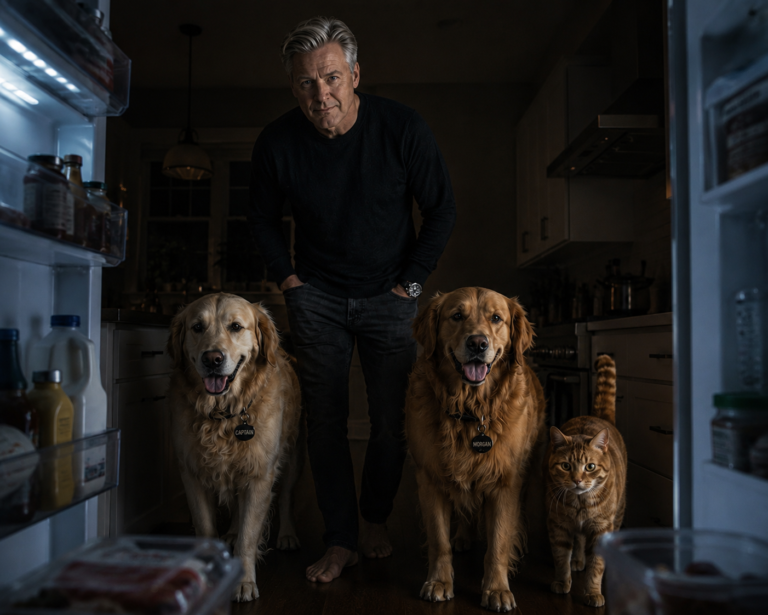
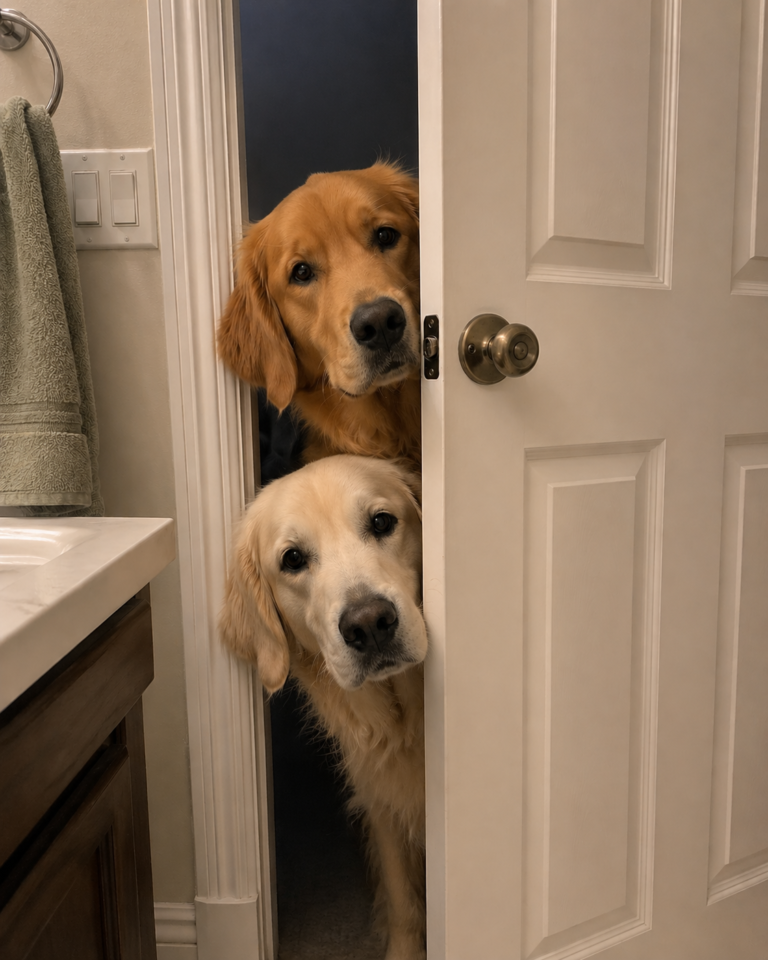
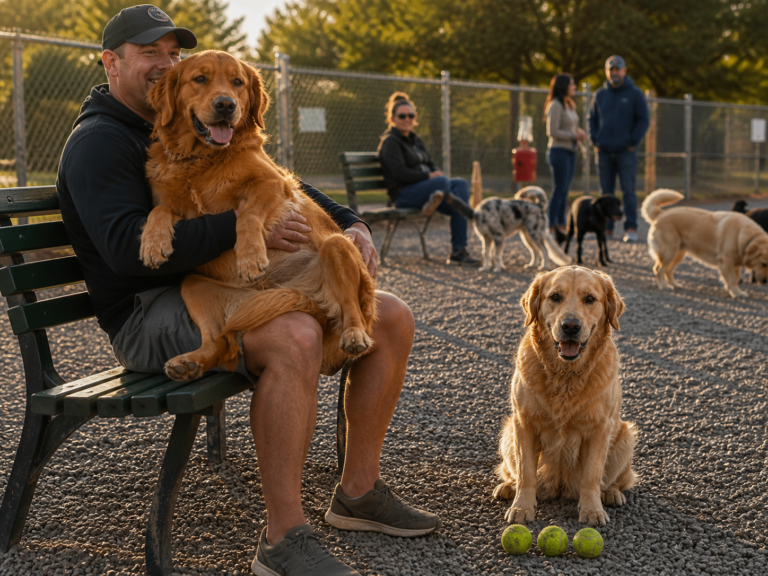
Captain and Morgan came into the house with the combined energy of a natural disaster that doesn’t know it’s a disaster. Puppies don’t understand grief. They understand now. They understand this smell, this texture, this moving thing that seems interactive. Winston, who had just achieved something close to equilibrium, found himself subject to investigation by two golden retrievers who had no frame of reference for personal space and no discernible interest in developing one.
He responded the way anyone responds when their carefully reconstructed peace gets disrupted by enthusiastic strangers. He ate more.
I want to be careful here not to project. I am, nevertheless, going to project.
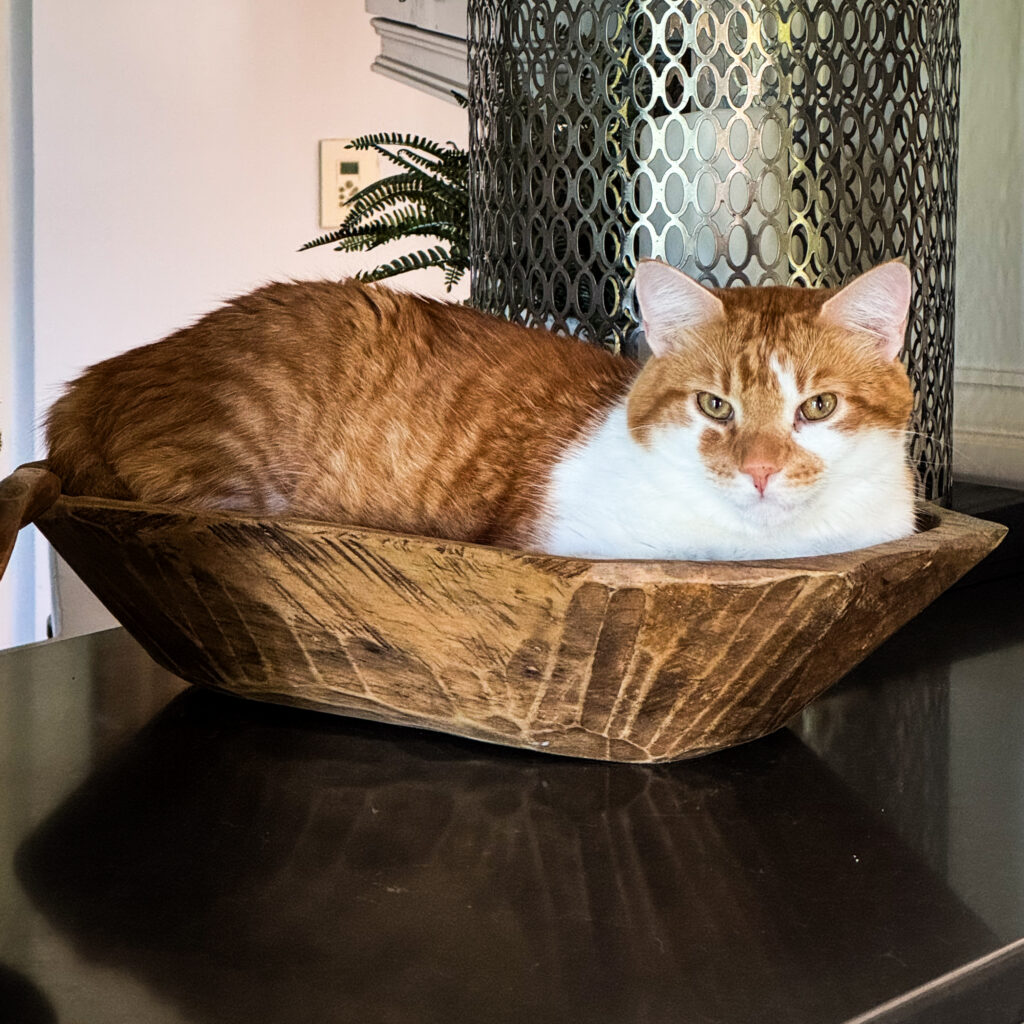
Winston understood something about what was happening. The boys were young, enormous, and growing. They had paws the size of small dinner plates and the physics of toddlers who haven’t learned that falling is bad. Winston was a twelve-pound cat with the bone structure of a Victorian gentleman who’d never been asked to do anything athletic. The math was not in his favor.
So he did the only logical thing. He changed weight classes.
This is not a metaphor. Or it is a metaphor, but it’s also literally what happened. Winston began eating with intent. Not grief this time. Strategy. The distinction matters, though the calorie count is similar. He wasn’t medicating anymore. He was training. Or rather, he was making himself harder to dislodge. Larger. More present. More difficult to accidentally sit on without consequence.

By the time he reached his current fighting weight — which I will not specify here because Winston can read and his feelings about numbers are complicated — he had achieved something. The boys, who will attempt to put literally anything in their mouths, including each other, had learned to be thoughtful about Winston. Not afraid. Thoughtful. There is a difference. Fear makes you avoid a thing. Respect makes you think before you engage with it.
Winston had claws. Winston had always had claws. But claws are a deterrent only if the other party believes the threat is credible. A twelve-pound cat issuing warnings to two dogs who together weigh more than most motorcycles is making a philosophical argument. A twenty-two-pound cat making the same argument is stating a policy.
The boys got it eventually. They still bother him. But they bother him with a kind of deference that is genuinely touching if you watch it carefully. There’s a moment, right before Morgan’s nose makes contact with Winston’s tail, where he hesitates. Just a half-second. The pause of an animal who has learned, empirically, that consequences exist.
Captain doesn’t even try anymore. Captain has done the geometry.
What I find myself thinking about is the weight itself. We spent real money on veterinary conversations about Winston’s trajectory. We bought special food. We had discussions about portion control that Winston attended with the expression of a man waiting politely for you to finish being wrong. He has his own bowl now, in a different room, because meal logistics in this house require the coordination of a small air traffic control operation.
And his weight has stabilized. Not because we solved it. Because he decided it was solved.
The boys have grown into themselves, or something close to it. The chaos-to-substance ratio has improved. They are still dogs, which means the chaos will never fully resolve, but it has a shape now, a predictability, and within that predictability Winston has apparently concluded that his previous defensive expansion is no longer strategically necessary.
He still holds the alpha position. Not by size now, really. By history. By the specific authority of the animal who was here first and knows where everything happened. The boys defer to him the way you defer to someone who was in the room before you arrived: not because they’re larger, but because the room was theirs first.

Winston is currently asleep on the chair he has destroyed with the quiet dedication of an artist who works in upholstery. He arrived in this house lean and wary and survived a loss and then a reinvention and now an uneasy détente with two golden retrievers who outweigh him significantly but would not dare.
I’ve known people like this. The ones who figure out which version of themselves the situation requires and become that version, not permanently, but until the situation resolves, and then quietly return to something smaller and sufficient.
The difference is most people never quite figure out when to stop.
Winston, apparently, has.
He’s sleeping on my socks again.
I choose not to disturb him.